

The Strategic Guide To Non-profit Salesforce Budgeting From Licensing To TCO
Design Trends / May 15, 2026
AI Blog
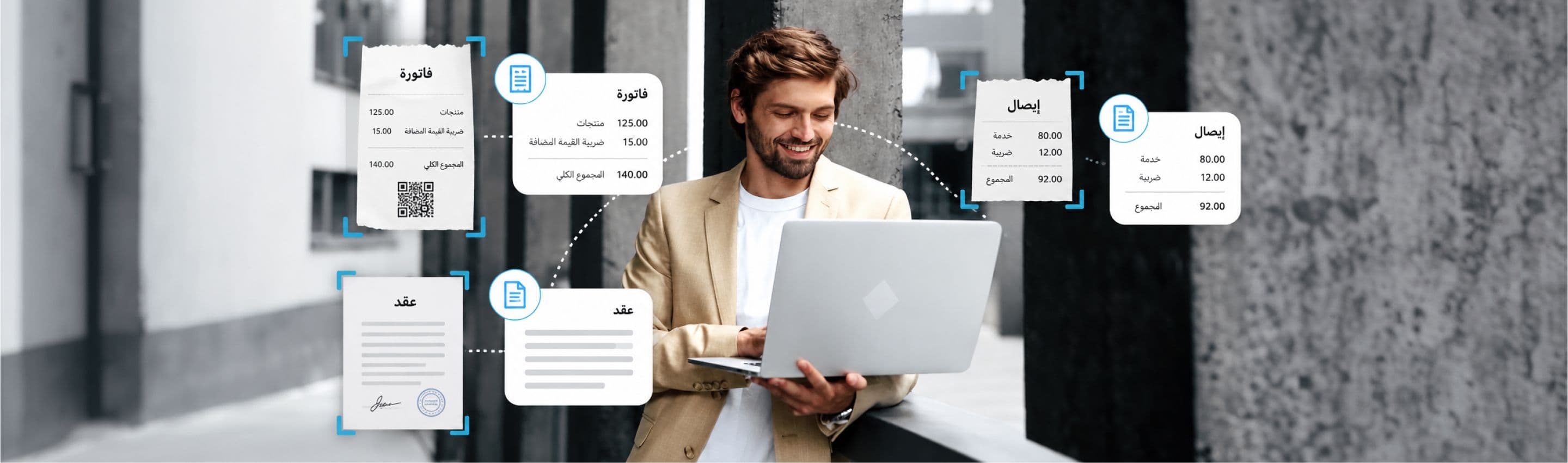
Invoices are some of the most common documents businesses handle. Finance teams receive them from suppliers, verify the details, record the information, and enter the data into accounting or ERP systems. If this process is done manually, it takes a lot of time and can lead to mistakes.
Optical Character Recognition (OCR) helps automate the manual part of the data entry process. It converts scanned documents and images into a machine-readable format, extracting information from business documents. However, extracting information from Arabic invoices presents additional challenges.
Companies across the Middle East and GCC receive invoices written in Arabic or containing a mixture of Arabic and English on a regular basis. Many conventional OCR solutions are designed primarily around Latin-based languages, making complex Arabic layouts, right-to-left text, and bilingual content more difficult to process reliably.
The challenge is not simply recognizing Arabic characters. Businesses need to extract accurate invoice details, preserve their relationships, and convert them into structured data that can be used in financial workflows.
In this article, we will explore how Arabic OCR works, why invoice extraction is challenging, what to look for in an OCR solution, and how AI-powered document intelligence can improve the process.
Arabic OCR (Optical Character Recognition) is a technology that identifies Arabic text in scanned documents, photographs, and PDF files and converts it into machine-readable text.
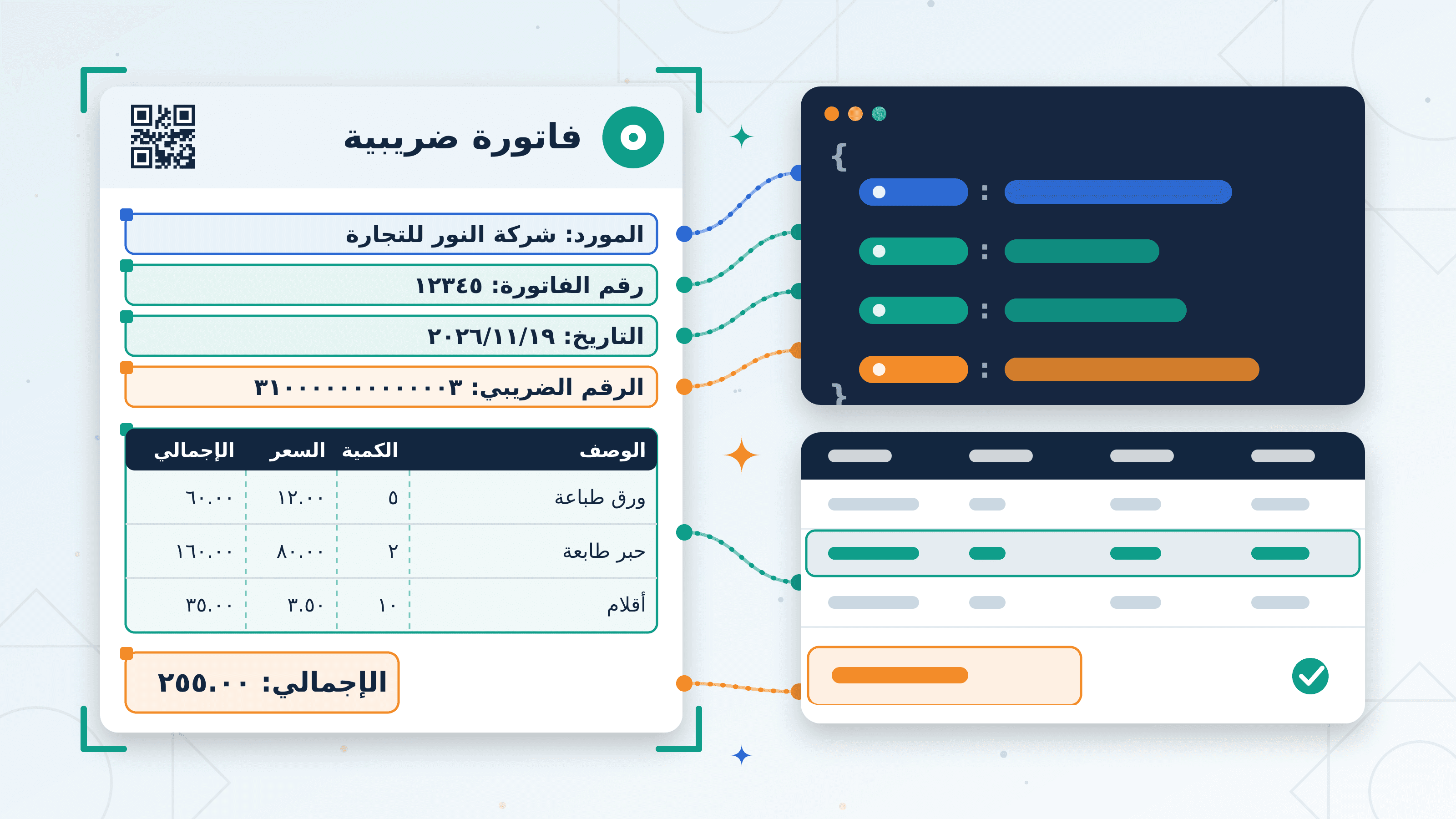
For example, consider a supplier sending a scanned Arabic invoice. Instead of manually typing the supplier's name, invoice number, date, VAT registration, and total amount into an accounting system, an OCR solution can recognize the text and make it available for further processing.
A typical OCR workflow involves several stages:
Document input: The system receives a scanned invoice, image, or PDF.
Image preprocessing: The document is prepared for recognition through operations such as rotation correction, noise removal and image enhancement.
Text recognition: The OCR engine identifies characters, words, and numbers.
Layout analysis: The system identifies document sections, tables and the relationships between different elements.
Data extraction: Relevant information is identified and organised into fields.
Validation: Extracted information is checked before being transferred into another system.
It is important to distinguish text recognition from invoice data extraction. OCR can identify the characters on a document, but that does not necessarily mean it understands which number represents the invoice total or which text belongs to a particular line item.
For businesses, the objective is not simply to convert Arabic text into editable text. It is to obtain accurate, structured invoice information that can be used without extensive manual correction.
Arabic invoice processing involves several challenges that conventional OCR systems may struggle to handle, particularly when documents contain different languages, layouts and formatting conventions.
Unlike English, which is written left-to-right, Arabic follows the right-to-left writing direction.
This creates issues for generic OCR systems, which are normally designed to detect Latin-based texts. These systems may recognize the individual words correctly. However, they may fail to place the words in the right sequence when reconstructing the document.
The problem becomes more noticeable in invoices containing tables, multiple columns or Arabic and English labels side by side.
For example, a total amount may appear beside an Arabic label. If the system fails to preserve their relationship, the extracted output might contain the correct number but associate it with the wrong field.
Many organizations in the Middle East receive bilingual invoices.
They may have the supplier’s name written in English, the address in Arabic, product descriptions in Arabic, and they may use Western numerals for financial information.
This creates an additional challenge for OCR systems that assume a document follows one consistent reading direction or language.
A solution must be able to recognize both scripts while preserving the relationship between labels, values, and document sections.
Invoices may contain different numerical formats, including Arabic-Indic numerals (١٢٣), Western numerals (123), decimal separators, thousands separators and different currency formats. These conventions can vary between regions. For example, some countries use a comma as a decimal separator and a dot as a thousand separator.
An OCR system must first recognize these numbers accurately, regardless of the format used. The extracted values may then need to be normalized into a consistent format before they can be processed by accounting software or spreadsheets. Without this step, a number may be recognized correctly but interpreted incorrectly by the receiving system.
Date formats and currency values should also be standardized before the extracted data is used in financial workflows.
Financial documents contain important details that must be accurately recognized and linked to the correct fields. This requires more than basic text recognition.
These details include supplier and buyer information, invoice numbers and dates, VAT registration numbers, taxable amounts, VAT percentages and amounts, subtotals, final invoice totals and currency information.
These fields are particularly important for Saudi Arabian companies processing electronic and VAT invoices. Saudi Arabia's Zakat, Tax and Customs Authority (ZATCA) also specifies requirements for electronic invoice QR codes. An OCR solution must therefore identify both the content and structure of an invoice to extract the correct information.
OCR tools have the most difficulty in processing the tables in invoices. Product descriptions, quantities, unit pricing, VAT rates, and line totals are all common components of an invoice. These fields may be included with English item codes or number references in Arabic invoices.
A simple OCR can easily recognize every character. However, it may fail to maintain the relationships between the columns and other information.
For instance, the quantity or unit pricing of a product may be separated from its description. The final spreadsheet could appear comprehensive but have inaccurately related data.
Instead of producing a single, huge block of recognized text, a trustworthy invoice extraction solution should keep distinct rows and the fields that correspond to them.
There are additional factors to consider when selecting an Arabic OCR solution beyond how well it can identify Arabic characters. Companies should think about how well it manages whole documents and whether its output can be integrated into their existing workflows.
Rather than relying on vendor demonstrations alone, test the system using real supplier invoices. This helps establish how well it performs under actual conditions.
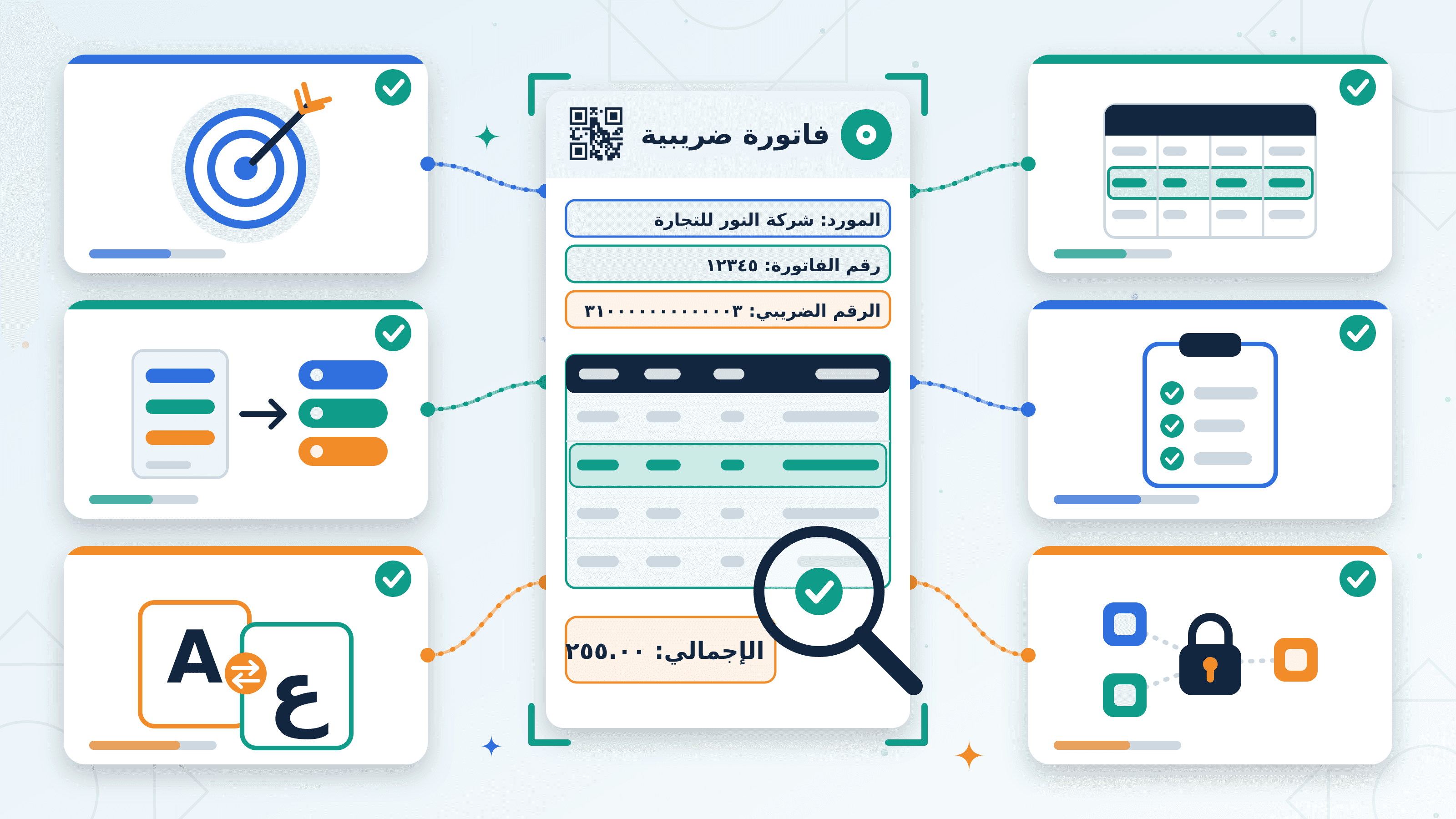
The software should be able to pick out details like dates, invoice numbers, supplier information, VAT data, totals and individual line items. The extracted data should be grouped into defined fields, making it easier to use.
If your company processes invoices in both Arabic and English, the system must manage mixed-language materials without compromising the connection between different fields.
It is essential to maintain invoice rows, quantities, unit prices, and tax information. This becomes particularly important when dealing with invoices that contain multiple line items.
Before inputting extracted values into accounting or ERP systems, ensure that they are verified.
Ensure that the solution you are selecting can easily be integrated with your current document management, ERP or any other systems. Additionally, assess how information is stored, where papers are handled, and most importantly, whether it satisfies the security and compliance needs of your company.
Businesses looking to automate Arabic invoice processing have several options, ranging from dedicated invoice readers to broader accounting and document intelligence platforms.
Here are some tools worth considering.
Provides document intelligence capabilities for processing business documents, including Arabic and bilingual invoices. It focuses on document understanding, structured data extraction, and table recognition, with support for local deployment.
A browser-based tool designed specifically for Arabic invoices. It extracts invoice details and line items, supports Arabic layouts, and exports data to Excel and accounting platforms.
A desktop application for extracting invoice information, with Arabic and English support, QR code reading, batch processing, and Excel or CSV exports.
An accounting platform with AI-powered invoice and receipt scanning that supports Arabic. Its invoice processing features are integrated into its wider accounting environment.
This is an accounting and business management platform offering an electronic invoice reader that scans invoice QR codes and checks invoice information against ZATCA requirements.
An accounting platform designed for businesses in Saudi Arabia, with Arabic invoicing, VAT management, and ZATCA-compliant e-invoicing capabilities.
Different document extraction solutions operate in distinct manners. The foundational technology can greatly influence how efficiently a system manages intricate invoices.
Conventional OCR recognizes characters but requires supplementary logic to pinpoint invoice numbers, totals, and tax figures.
Vision-language models evaluate both the content and layout of the document simultaneously. They can utilize context to determine, for instance, that a figure next to "الإجمالي" signifies the invoice total. However, they also have the potential to generate plausible yet incorrect values.
Hybrid processing merges OCR with AI to identify text and categorize it into organized fields.
The optimal method is contingent upon the complexity of the documents, the volume of processing, the requirements for accuracy, and the necessity for validation.
Document intelligence can help businesses handle large amounts of invoices in Arabic. It basically allows these organizations to extract information, maintain its structure, interpret the document’s layout and ensure that the invoice data is available for further processing.
ProvidusAI supports this approach through document parsing, structured data extraction and table recognition. It can process Arabic and bilingual documents, extracting information that can be validated and used in wider business workflows.
One important factor to consider is data security. ProvidusAI enables local deployment using tools like llama.cpp and LM Studio, which permits organizations to operate the model within their own systems instead of depending on outside inference services.
With the entire workflow set up on-premises, documents can stay within the organization’s environment. This is especially significant for companies that have stringent data governance standards. The actual isolation of data is influenced by the overall architecture, including aspects such as storage, integrations, logging, and external services.
Providus merges document intelligence with enhanced control over the locations of document processing.
Extracting invoices in Arabic involves more than just recognizing characters in a scanned document. Companies require solutions that can interpret layouts that read right-to-left, manage bilingual content, pinpoint financial fields, and maintain the organization of invoice tables.
When assessing Arabic OCR solutions, organizations should focus on more than just the claimed recognition accuracy. They ought to test actual invoices, evaluate the quality of structured extraction, verify numerical data, and consider how the solution integrates with existing business processes.
AI-driven document intelligence presents a chance to advance beyond simple text recognition toward more effective document automation.
For organizations aiming to cut down on manual invoice processing and enhance the management of Arabic and bilingual documents, selecting the appropriate technology is a crucial initial step.
Manual data entry and repeated corrections can slow down finance operations. ProvidusAI is designed to help organizations process complex documents and turn their contents into structured information.
If your business handles Arabic invoices, bilingual financial documents or large volumes of unstructured records, speak with our team about your document processing requirements.
Blogs & Insights
Design Trends / May 15, 2026

Experience / May 3, 2026